Indian Wedding Packages in Punta Cana: What’s Included?
An Indian wedding package in Punta Cana includes only the events, quantities, hours and services listed in its written proposal. An all-inclusive hotel stay does not by itself include a private multi-day wedding. Compare the ceremony program, food, production, guest and room requirements, supplier rules and weather arrangements before choosing a package.
Compare packages against your real program
Share your proposed celebrations and guest numbers with Sertuin Events to identify inclusions, gaps and responsibilities before you commit.
South Asian wedding planning in Punta Cana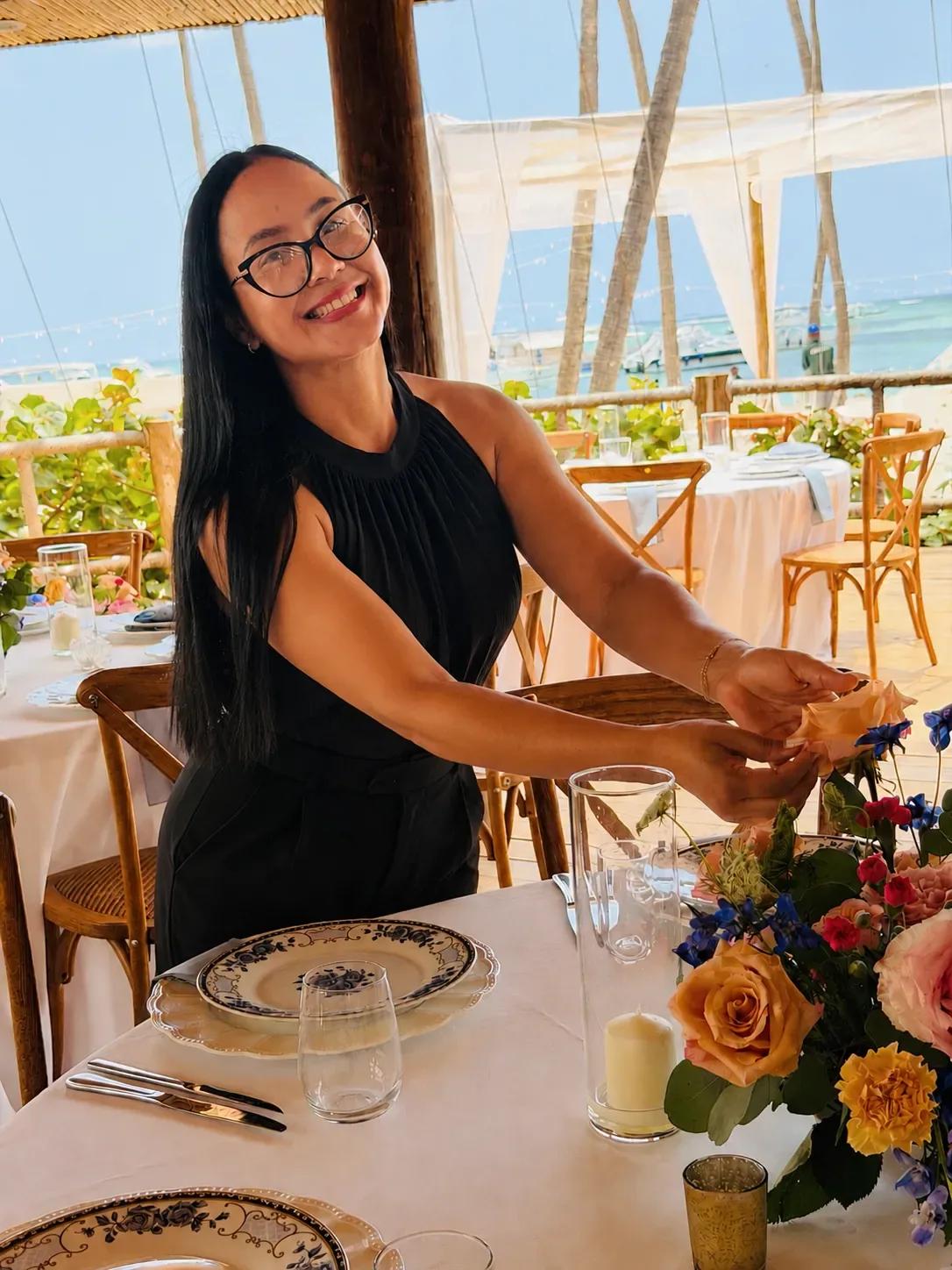
Begin with your own celebration list
Write down the celebrations your family wants before reading package names. A Haldi, Sangeet, Mehndi, ceremony or reception may be relevant to your plans, but none should be presumed obligatory for every Indian couple. Indian identity does not define one religion or a single wedding format. Your family and chosen cultural or religious authority should determine the ceremony content.
Give each event its own line: date, expected attendance, duration, food, venue, equipment and people responsible. A package advertising several events may combine two activities in one time slot. If you want separate celebrations, ask whether that means another venue booking, staffing period or meal service.
Separate accommodation, wedding services and planning
An accommodation package describes the hotel stay. A wedding package describes specified event services. Independent planning describes the professional work of developing and coordinating your celebration. These can be purchased together or separately, but their labels are not interchangeable.
As a published example checked on November 18, 2026, Sertuin Events lists specialized South Asian planning at USD 4,999 for up to four event days. A fifth day and third-party services are quoted separately. This is a planning service, not a hotel wedding package or a complete celebration budget. Ask for the scope that fits your particular program.
Confirm the event clock, including setup
For every included activity, ask for the guest-facing start and finish time and the separate access period for installation. A three-hour reception does not establish when decorators may enter or when equipment must leave. Those access windows determine whether suppliers can deliver the design you have selected.
Ask what happens if a ceremony runs longer, whether a later start changes the permitted finish, and who can approve overtime. Clarify whether additional time is available at all before discussing its price. Do not assume a paid extension can override a venue's operating limits.
Check guest limits against each event
The package's headline guest number may not apply identically to every meal, ceremony or private space. Confirm whether the couple, children and working suppliers count toward each limit. Request additional-guest prices by activity, together with any minimum attendance or spending requirement.
Room conditions need a separate review. Ask which bookings count, what stay length is required and what happens if fewer rooms are reserved. A room night is not a room: ten rooms occupied for three nights represent thirty room nights. Record the actual contractual definition rather than relying on a verbal shorthand.
Read the catering description in detail
A promise of Indian cuisine needs a menu review. Discuss the dishes your family wants, service style, tasting arrangements, timing and the kitchen's ability to accommodate the specific dietary requirements you identify. Vegetarian, vegan, Jain and allergy-related needs are not interchangeable descriptions; do not let one generic label stand in for the entire group.
Ask whether private-event meals are included, even when guests receive regular meals through their hotel stay. Confirm drinks, service duration, staffing, children’s meals and supplier meals separately. Any requested special preparation should be approved by the catering team, rather than inferred from photographs or another wedding's menu.
Distinguish a ceremony setup from complete production
A decorated ceremony structure is not a full inventory. Request dimensions, seating quantities, furnishings, floral scope and exactly which installation and removal services are included. If your ceremony needs a mandap or specific materials, have the requirements checked by the person directing it and the venue team.
For a Sangeet or reception, separate the DJ's performance from speakers, microphones, lighting, staging and dance-floor provision. Ask who brings each item and who operates it. A photograph can communicate a style, but only an itemized proposal tells you whether the photographed production is included.
Clarify specialized professionals and venue access
A package may mention help with finding professionals without paying their fees. Ask whether artists, performers, photography, video and the officiant are actually included, optional or independently contracted. For each included service, record coverage hours, staffing, deliverables and any travel or accommodation requirement.
Hard Rock Punta Cana's official wedding page describes South Asian weddings and assistance with Indian cuisine and Mehndi artists. That establishes advertised capability, not the inclusion of every service in your package. Request the current proposal and written supplier-access conditions for your date before paying an outside professional.
Plan the alternative space and the handover
Ask which weather alternative is reserved for every outdoor activity. Confirm usable capacity with your actual layout, availability for the required time and whether moving décor or equipment creates an extra charge. A ballroom somewhere in the hotel is not the same as a ballroom held for your event.
Create a clear handover between the hotel's coordinator, your independent planner and each supplier. Identify who approves the final schedule, who resolves access issues and who can authorize spending. If two teams coordinate different parts of the wedding, give both the same current event documents.
Read a sample comparison without mistaking it for a quote
Imagine two entirely hypothetical offers. Package A provides one private dinner for 80 guests over three hours. Package B provides that dinner plus a two-hour welcome gathering for 60 guests. A costs less at first glance, but you cannot conclude that it is better value until you price the welcome gathering separately or decide that you do not need it.
Now imagine that A includes sound for the ceremony while B offers it as an option. Mark that difference too. The comparison must follow your chosen program, not whichever package has more bullet points. These invented examples illustrate an audit method; they are not current resort inclusions or prices. Ask each venue to answer the same event-by-event checklist before making a choice.
Check whether two named activities share one allowance
A proposal might describe a combined celebration using two familiar event names. Read the actual time and catering allocation. If both activities share four hours, it does not mean you receive four hours for each. The same issue applies when décor or entertainment is described once but pictured at several moments.
Ask the venue to show the exact allocation in the schedule: what starts when, where meals are served and which equipment remains available throughout. If your family wants separate locations or a longer transition, request a revised proposal. Preserve the family's choices while making the operating consequences visible. The package should adapt to the approved program only where the venue confirms it can do so.
Turn reference images into a written design schedule
Select a few images that explain your priorities, then ask which elements the proposal reproduces. Specify the structure, fabrics, flowers, seating and lighting individually. Identify anything shown only as inspiration. A display photograph may contain upgraded items or a different guest layout, so an image alone cannot define what you are buying.
If you accept a substitution, describe the acceptable outcome rather than relying on a vague promise of something similar. Ask who approves the final design and when changes stop being possible without additional charges. Keep the accepted design with the proposal. This gives suppliers a clear basis for delivery and allows the couple to distinguish an agreed alternative from an unapproved change.
Treat every guest category explicitly
Ask how the proposal handles adults, children in each applicable age band, infants and the couple. If a venue applies different rules to hotel residents and guests staying elsewhere, request the actual conditions and approved attendance limits. Do not assume that every invited person can enter by buying a pass on arrival.
Record suppliers separately from guests where the venue does so. A photographer working during dinner may need access and a meal without occupying a guest seat. The correct treatment depends on the venue and the contract. A practical attendance sheet should distinguish these categories and the activities each person attends, so the final invoice can be checked against the agreed quantities.
Clarify room-related benefits before counting savings
If the proposal offers event benefits tied to group accommodation, ask exactly which reservations qualify and how the benefit is calculated. Confirm booking channel, stay dates, eligible room categories and the deadline for meeting the requirement. Ask what happens if bookings change, guests leave early or some attendees reserve independently.
Keep the benefit conditional until the venue confirms it has been earned under the agreement. A discount you hope to receive should not be treated as money already available for décor. Compare the accommodation price paid by guests as well as the host's event bill. A benefit can be useful, but the full group's costs remain relevant to the decision.
Write an operational brief for culturally specific requirements
Have the family and the person directing each ceremony identify materials, layout, timings and any other requirements. Give that brief to the venue before booking, especially where a request affects use of the space or technical arrangements. The planner coordinates the response; the appropriate authority defines what the ceremony requires.
Ask for a clear answer to each requirement: approved as proposed, approved with conditions, unavailable or requiring further review. Do not substitute a sales description of Indian weddings for permission to carry out a particular activity. If a condition changes the ceremony, return it to the family or officiant for a decision rather than resolving it solely as a production issue.
Confirm the people behind included services
An included service needs an identified provider or a clear process for assigning one. Ask who performs it, what happens if that person becomes unavailable and what the substitution process involves. For artistic work, discuss the relevant style, expected output and coverage rather than relying only on a generic label.
For planning and coordination, ask when support begins, which meetings are included and who is present for each contracted event. A coordinator named in a package might manage hotel services while another professional handles family requests and outside suppliers. Those roles can complement one another when their boundaries and communication are agreed in advance.
Separate decisions needed now from decisions due later
Some choices determine whether a package is suitable at all: event count, guest capacity, cultural requirements and venue access. Others may be refined later, such as approved colour selections. Ask the supplier to distinguish essential booking decisions from later planning deadlines, and record the consequences of missing each date.
Do not sign on the assumption that an unresolved essential request will be approved afterward. Ask what can be confirmed now and what remains conditional. If you proceed with a conditional item, understand the options provided by the actual agreement. Later design flexibility is helpful only when it does not conceal uncertainty about the basic feasibility of the celebration.
Keep a final checklist for the handover
Before the final event review, collect the approved program, guest counts, menus, design, supplier list, payment status and outstanding decisions in one current set. Ask each responsible team to confirm its own section. Identify a contact for delivery changes and clarify who can authorize an extra cost on site.
After any approved revision, circulate the updated version rather than relying on a long chain of messages. A change to ceremony timing can affect photographers, catering and transport at once. The package becomes usable when its promises are translated into clear operational instructions. That final review should connect the agreement you signed with the celebration each team is preparing to deliver.
Compare two proposals without losing the exclusions
Mark every requested item as included, separately priced, unavailable or awaiting confirmation. Keep unresolved items visible instead of treating a blank as zero. Compare totals only after both suppliers have answered the same brief; a lower base price can reflect fewer hours or fewer private events.
Before signing, request the payment schedule, cancellation and change terms, price validity and treatment of taxes or compulsory charges. These terms should come from the actual agreement. Save the final inclusion list with that agreement so that later design changes can be assessed against a clear starting point.
Related planning guides
Continue with these guides to turn the questions in this article into a practical planning brief for your celebration.
Frequently asked questions
Does all-inclusive mean every wedding event is covered?
No. The accommodation plan and private-event package have separate scopes. Ask for the exact wedding services included.
Are Haldi and Sangeet automatically included?
No. Check whether each chosen event is named, how many guests it covers, its duration and its setup.
Is the religious officiant included?
Only if the written proposal says so. Confirm the individual, availability, fees and any travel arrangements separately.
Can we bring our own suppliers?
Ask the venue for current permission, access conditions and charges before booking. Do not generalize from another hotel's rules.
 DR Web Studio

