Jellyfish vs. Kukua: Punta Cana Wedding Comparison
Neither Jellyfish nor Kukua is automatically the better wedding venue. Both advertise weddings in Bávaro; the useful comparison is your exact program at each location. Request matching proposals with the same guest count, meal, bar hours, layout, transport and weather alternative. Choose from documented suitability and the full cost, not photographs or an unsupported price ranking.
Compare both venues with the same brief
Share your dates, guest count and hotel shortlist to organize a practical venue comparison.
wedding venue sourcing in Punta Cana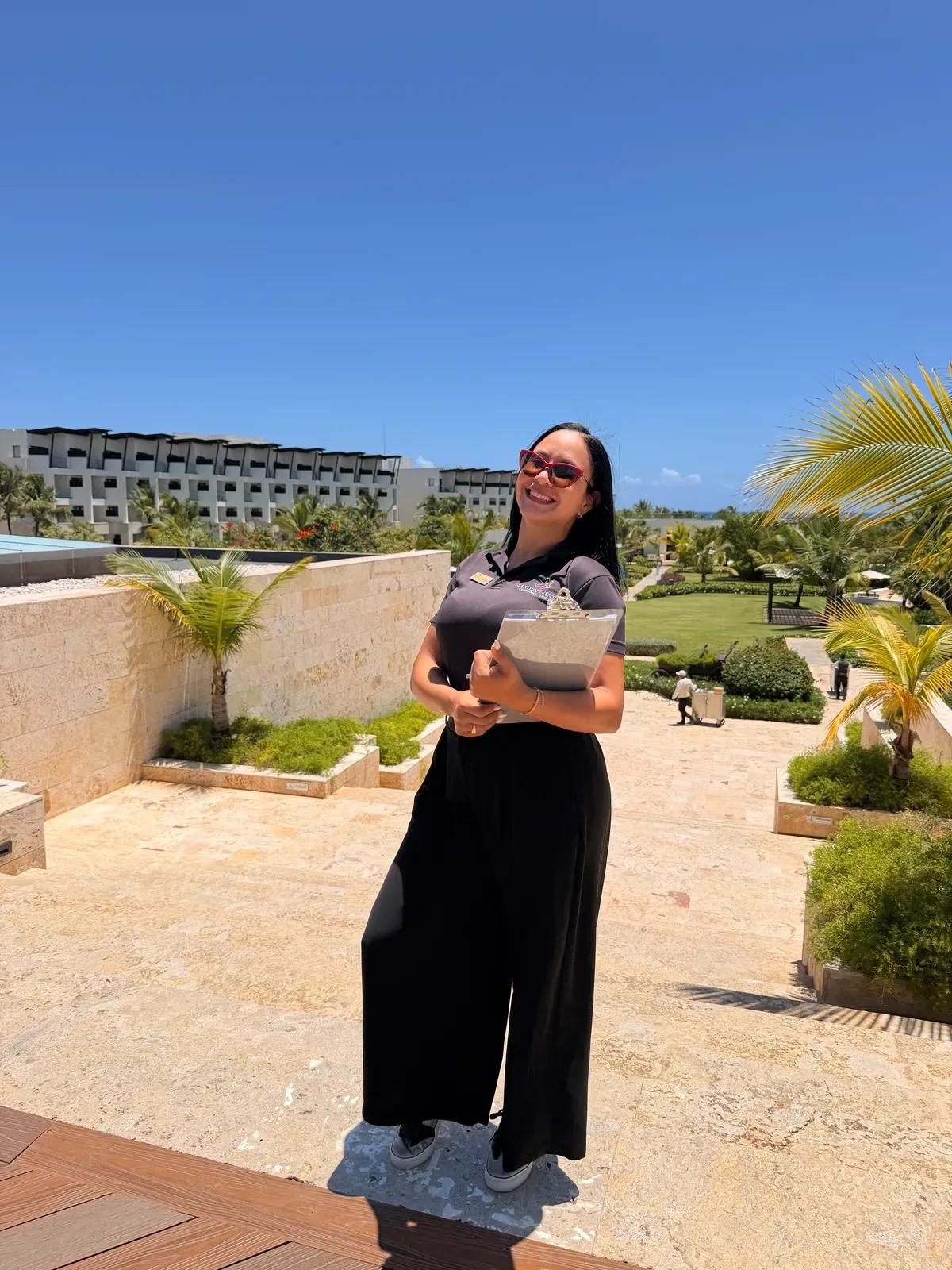
What can be verified before requesting a quote
Jellyfish's official wedding page places its celebrations on Bávaro Beach. Kukua's official FAQ describes a beach venue on private property between the RIU and Bahía resorts. These are useful starting points for locating both options, not evidence that either venue is nearer to every hotel.
Avoid copying approximate journey times from blogs. Punta Cana covers different hotel areas, and the relevant trip begins at your actual pickup location. Request the route from your selected accommodation to each venue, including the resort's vehicle access procedure.
Compare one wedding brief, not two different packages
Send each team a single brief with date options, expected adults and children, ceremony type, dinner format and reception hours. Include the dance floor, entertainment, accessibility needs and any separate getting-ready arrangements. Request an itemized response showing what is included, optional or unavailable.
When a proposal changes the menu, bar duration or guest count, update the comparison instead of treating the headline totals as equivalent. A lower price may describe less event time or a different service. Likewise, an upgrade only adds value when it solves a priority you actually have.
Ask for the layout that fits your celebration
A general capacity number does not establish that your dinner, dance floor, stage and service routes fit together. Ask each venue for a plan using your actual guest count and preferred furniture. Check where guests wait between ceremony and reception, where suppliers work and how people reach restrooms.
Request the same plan for the weather alternative. If tables must move after the ceremony, clarify who moves them, how long it takes and where guests go meanwhile. A venue should be evaluated as a sequence of spaces and transitions, not a single attractive photograph.
Understand exactly what privacy means
Ask which areas your booking reserves, for what hours and whether other restaurant activity can occur during the event. Confirm the boundaries of any private area and what the team can control around beach access. Do not infer an exclusive beach from a photograph with no other people.
Also ask when suppliers may begin setup and when breakdown must end. Exclusivity during the reception may not include the preceding preparation period. Put these details into the agreement, along with any additional charge for extending use.
Make transport part of the venue comparison
List every hotel used by the wedding group. Estimate separate departure waves for the couple, wedding party and other guests. Request vehicle type, pickup contact, waiting allowance and return arrangements. Guests who leave early should have a clear option that does not require the couple to organize a taxi mid-reception.
For children, older relatives and guests with mobility needs, verify the actual vehicle and boarding arrangements. Do not assume a short distance means an accessible walk. Include the transport total in both venue budgets so the apparently cheaper venue does not hide a more complex transfer plan.
Compare menus, service and the full invoice
Ask how tastings work and whether the tasted menu matches the contracted wedding menu. Record dietary requirements precisely, including allergies requiring direct discussion with the catering team. Distinguish a menu preference from a medically necessary food restriction.
Compare venue charge, food, drinks, staffing, furniture, décor, lighting, sound, transport and coordination separately. Confirm taxes, service charges, overtime, minimum spending and payment currency. Ask how guest-count changes affect the bill and when the final number becomes binding.
Review suppliers and weather decisions
Ask both teams whether your chosen photographer, DJ, florist or production company can work there, and what access, insurance or supervision requirements apply. Do not assume that an independent venue has no supplier restrictions. Clarify who holds the final schedule and resolves a late delivery.
For rain or strong wind, request the decision deadline, responsible person, available covered space and any additional costs. Ask what happens when the alternative layout cannot accommodate the complete program. A documented fallback is more useful than reassurance that most weddings enjoy good weather.
Read the different privacy options precisely
Jellyfish describes partial and whole-venue reservations; its partial option can leave upstairs restaurant service open. Kukua states that events requiring closure are limited to one per day. Confirm the areas and hours reserved in your own offer.
These descriptions answer different questions. One describes which areas may be booked, while the other describes an event policy. Neither substitutes for a plan showing your ceremony, reception and supplier access. Ask both teams to mark the areas included in the proposal and explain what guests may encounter outside those boundaries.
Think about the experience you want during each part of the day. You might be comfortable with activity elsewhere while wanting an uninterrupted ceremony and speeches. Tell the venue that distinction instead of requesting privacy without defining it. Include the couple’s preparation space, photographs and guest arrival in the discussion, because exclusive dinner arrangements may not explain those earlier moments.
Trace the whole day during the walkthrough
Begin a site visit at the vehicle arrival point and follow the route as a guest would. Find the first person welcoming the group, the ceremony seats, refreshments, dinner and restrooms. Ask to see the same route in the alternative layout. This exposes practical differences that a gallery of decorated tables cannot show.
Then repeat the exercise from the couple’s perspective. Where will you dress, leave personal belongings, meet the photographer and wait before the entrance? If you prepare elsewhere, include the transfer and arrival handoff. A beautiful room is less useful if your chosen schedule does not allow you to reach it comfortably.
Finally ask how suppliers move. Where do deliveries arrive, where is equipment stored and which route remains clear during service? These are questions for both venues, not claims that either has a problem. Record the answers alongside photographs from your own walkthrough so the final layout can be checked against what you actually saw.
Compare coordination without buying the same task twice
Ask the venue team which planning and coordination tasks it handles, from the first proposal to the last collection after the reception. Then list the work happening outside the venue: hotel communications, travel arrangements, additional celebrations and separately contracted suppliers. The boundary is more useful than deciding from the job title alone.
If you are considering an independent planner, request a division of responsibilities. For example, the venue could control its own food service while the independent coordinator manages guest transport and the overall timetable. This is an illustrative arrangement, not a statement of either venue’s contract. The actual teams must agree on their roles.
Choose one operational contact for changes on the day and explain who approves additional spending. The couple should not receive competing questions from several teams during the ceremony preparations. A clear division can avoid duplicated work while preserving the local knowledge of the venue’s own staff.
Test both proposals against two realistic guest scenarios
Use your expected attendance and one plausible alternative. For example, compare a hypothetical group of forty adults with a later increase to fifty-five, keeping the same ceremony and reception format. These numbers are planning inputs, not statements about either venue’s capacity or prices.
Ask each team what actually changes: meals, seating, tables, service staff, transport and the alternative layout. Some items may stay fixed while others increase in steps. A proposal that fits the first scenario may require a different arrangement for the second. The important result is the documented change, not a generic cost-per-person estimate.
Also test a smaller final group if that is a realistic uncertainty. Ask which commitments remain and when the number must be finalized. Comparing these responses helps you understand flexibility before committing. Keep the scenario sheets with the same date and service assumptions so you are not accidentally comparing different weddings.
Use a decision sheet that separates essentials from preferences
Identify requirements that would rule a venue out if unmet: an acceptable alternative space, a necessary access arrangement, a menu requirement or a firm budget ceiling. Confirm these before assigning scores to décor or atmosphere. A high average score should not conceal one unresolved requirement that makes the plan unsuitable.
Next choose a few preferences that genuinely distinguish your options, such as the feeling of the reception space, the amount of guest movement or the preparation arrangements. Decide their importance together before reading the final totals. This reduces the temptation to change the scoring method simply because one proposal photographs better.
Mark missing answers as unconfirmed. Do not award a venue a good or bad score based on a guess. Once both teams respond, review the sheet against the actual proposal rather than against advertising language. If one venue meets your essentials and the other cannot confirm them, that is a useful difference even without a universal winner.
Keep a record from shortlist to final reservation
Save the current itemized proposal, layout, scope of reserved areas, transport plan and payment conditions together. Note who answered each outstanding question and when. If a quote changes, replace the comparison figures and keep the previous version for reference rather than combining favorable details from several incompatible offers.
Before paying, confirm the exact date and what is required to reserve it. Ask how changes, postponement and cancellation are addressed in your booking documents. A conversation about availability is not the same as a confirmed reservation. The wedding team should tell you which confirmation you will receive after completing its process.
Use the first-meeting checklist to prepare the information a planner needs to compare venues effectively. Bring your guest list assumptions, accommodation options and priorities. The goal is a venue choice that works for your particular group, with a clear division of services and a complete price you understand.
Check a fictional like-for-like calculation
Imagine two unnamed, entirely fictional proposals. Offer A totals USD 12,000 and includes the transfers you need; offer B totals USD 11,000 but requires another USD 1,500 for equivalent transfers. After that adjustment, the comparable totals are USD 12,000 and USD 12,500. These are arithmetic examples, not Jellyfish or Kukua prices or quotations.
Before deciding, check whether both totals also represent the same menu, bar period, guest count and charge basis. If taxes or service charges remain unresolved in either offer, the comparison is still incomplete. Do not insert a guessed percentage simply to produce a clean result.
The exercise illustrates a useful habit: add a line for every difference and request the missing quotation. A lower headline is only a starting point. Keep optional upgrades outside the basic comparison until you decide whether they matter, then compare the final chosen versions again. This prevents an attractive extra in one offer from disguising a missing essential in the other.
Choose according to your priorities
Create a short comparison with the criteria that would change your decision: acceptable indoor alternative, workable layout, access for relatives, menu requirements, complete price and contractual flexibility. Mark unanswered questions as pending, not as equal scores. Request answers before committing.
A site visit or live video walkthrough should follow the route guests will use and show the alternative space. Review the final proposal against that walkthrough. Sertuin Events can help coordinate venue research and compare the responsibilities in the written offers, while each venue confirms its own availability and terms.
Frequently asked questions
Which is cheaper, Jellyfish or Kukua?
There is no reliable universal answer. Compare current written proposals for the same date, guests, inclusions and hours, including transport and additional charges.
Are wedding packages proof of exclusive use?
No. The contract should identify reserved areas and hours, including setup and breakdown.
Can guests walk from their resort?
Confirm the actual route and accessibility with the venue and hotel. Do not infer a safe or permitted route from proximity on a map.
What should decide a tie?
Use the priorities that matter for your group, especially the weather alternative, layout, transport and complete contractual cost.
 DR Web Studio

