What Is the Best Month to Marry in Punta Cana?
For couples prioritizing comfortable outdoor conditions, December through early March is a sensible period to investigate first: Dominican tourism guidance describes it as the most pleasant weather period. There is no universally best month or rain-free guarantee. Compare actual date-specific quotes, guests' travel constraints and the venue's weather alternative before choosing.
Find a date that works for the whole wedding
Share preferred months, guest priorities and venue ideas to compare practical date options.
destination wedding planning in Punta Cana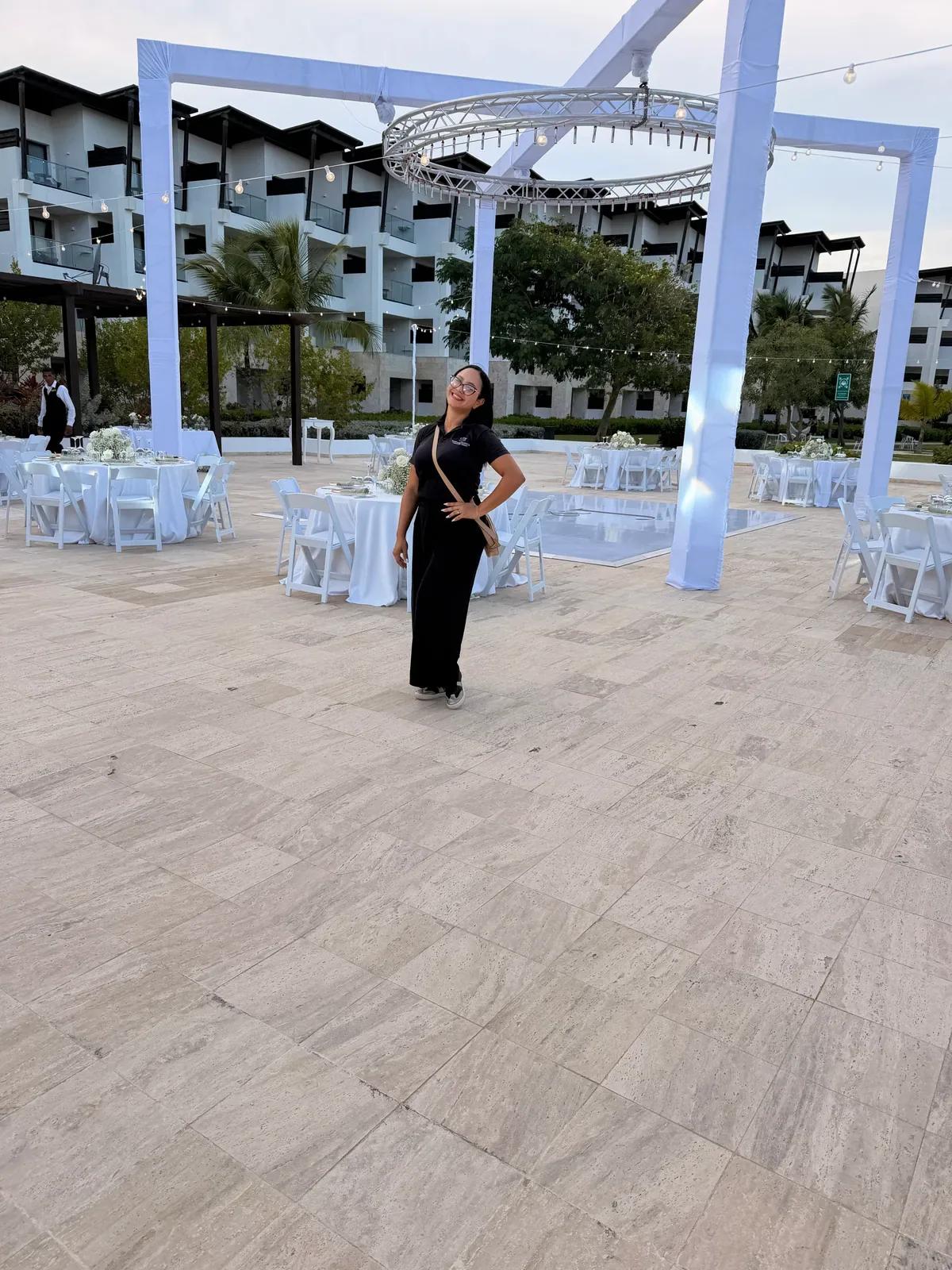
Start with priorities rather than a perfect-weather promise
A wedding date must work for the couple, essential guests and the venue. Write down which matters most: outdoor comfort, school holidays, room affordability or a meaningful anniversary. Then shortlist several dates instead of asking one climate statistic to solve the entire decision.
Dominican tourism guidance highlights December through early March for pleasant conditions. Treat this as a useful seasonal starting point, not a forecast for your wedding day.
Understand what historical weather can tell you
Monthly averages describe many past observations. They cannot identify whether rain will fall during your ceremony or how long a particular shower will last. Rainfall totals, number of rain days and probability of rain are different measures; do not interchange them.
When comparing climate tables, check the station, observation period and definition of a rain day. A short shower may count as a wet day without preventing an entire wedding. Conversely, a month with a lower average still requires a usable covered alternative.
Separate hurricane season from the daily forecast
The National Hurricane Center defines the Atlantic hurricane season as June 1 through November 30. That does not mean a storm occurs at every wedding during those months, or that dates outside the season are free of weather disruption.
If considering a date within that period, examine postponement, cancellation and travel-interruption terms before committing. Ask who monitors official alerts and who decides whether each event can proceed. A seasonal outlook cannot forecast conditions at your venue on a particular date.
Compare dates within the same month
Ask for room and wedding quotes for two or three exact dates with the same stay length and event program. Holidays, group demand and available room categories can change the result. Do not assume a month described as low season will always produce your cheapest total.
Check the dates guests must travel, not just the ceremony date. A weekend wedding may require flights several days earlier, and a cheaper room category may disappear before everyone books. Record quote validity, payment deadlines and what happens if the group does not reach the expected room count.
Use daylight to build the ceremony schedule
Ask the photographer to check the actual date, venue orientation and usable light. Sunset time alone does not determine the best ceremony time: buildings, trees, cloud and the direction of the beach affect the scene.
Work backward from the desired portraits, allowing for the ceremony, family groups and movement between locations. Keep a daylight buffer rather than scheduling every photograph at the last possible minute. Recheck after the venue and ceremony duration are confirmed.
Plan for comfort in every season
A tropical ceremony needs practical arrangements for shade, drinking water and waiting time. Discuss seating and the route from transport to ceremony, especially for older relatives and children. Ask where guests wait if suppliers need extra setup time.
Choose clothing and event duration with the expected conditions in mind. Confirm what equipment the venue can provide and whether cooling or covered waiting areas cost extra. The month does not remove the need to make guests comfortable.
Evaluate the weather alternative before the date deposit
Request the actual covered layout for your guest count, with dinner, dance floor and technical equipment included. Establish the decision deadline and any costs of moving the event. A vague promise of a tent does not confirm availability, installation time or safe operating conditions.
Also ask what happens if wind, lightning or an official restriction affects transport or outdoor production. Identify the people authorized to make safety decisions. The alternative should preserve a workable celebration rather than merely provide somewhere for guests to stand.
Turn a month preference into a short list of actual weekends
Start with a private conversation about the people whose absence would change the wedding for you. Ask those guests about immovable commitments before announcing a date. You do not need to poll every potential attendee or allow a large group to vote on the wedding. The aim is to identify a few constraints that genuinely affect the choice, such as a school term, a major work obligation or a relative's ability to travel.
Next, select more than one travel window and give each the same number of nights. Request the same room category and event inclusions for each option. Otherwise, a four-night stay in one month may be compared with a six-night stay in another, and the apparent seasonal saving will be misleading. Keep a record of when each quote was issued and when it expires.
Compare a complete stay, including the nights before and after the ceremony, rather than looking only at the wedding-night rate. If guests arrive from several countries, choose representative departure points and ask the travel professional to examine realistic connections. The date that suits the couple's direct flight may create an extra overnight connection for close family. Make those differences visible before asking anyone for a deposit.
Read a weather chart without turning it into a prediction
Suppose two historical tables appear to disagree about the wettest month. Before deciding that one must be wrong, inspect whether they use the same observation station, years and measurement. An airport record and a broad regional summary may describe different data. A table with no clear source or averaging period is a weak basis for a nonrefundable venue decision.
Do not convert a monthly rainfall total into a percentage chance of rain during your vows. That requires different information. Nor should a list of rainy days be treated as the number of entirely lost outdoor days. The planning question is whether your celebration remains comfortable and workable when the weather differs from the average.
When sharing climate information with relatives, use restrained wording. Explain that you chose a period after considering typical conditions and that the venue has a defined fallback. Avoid telling guests that it will not rain. They need practical information about what to pack and how schedule changes will be communicated, not an assurance the planning team cannot provide.
Compare the cost of the backup as part of the date
Ask the venue whether the covered alternative is included in the original hire, reserved for your exclusive use and large enough for the contracted event. If a separate room, structure or second setup requires payment, include that amount when comparing months. A lower outdoor quote can lose its advantage if the alternative arrangement is both essential and costly.
Clarify which expenses are committed before the weather decision. Flowers, sound equipment, furniture and staff may already have been ordered. Ask suppliers what can be moved and what must be duplicated. The useful answer is a sequence of actions with costs, not a general statement that the team will be flexible.
Consider an illustrative choice: date A has a higher room total but a covered reception space included; date B has cheaper rooms but requires a separate covered hire. Add the event and accommodation costs before calling B the less expensive option. This example explains the comparison method; it does not imply that a particular month or venue follows that pricing pattern.
Check every event day, not only the ceremony
A welcome dinner, rehearsal, boat outing and farewell meal each have their own exposure to conditions. Write down which events can move indoors, which can change time and which depend on an operator's safety decision. Do not assume the wedding reception's rain plan also solves a separate excursion.
If several outdoor events would move to the same room, check whether their schedules and setup needs conflict. An earlier activity may still be clearing while the next supplier needs to install equipment. Ask for the full sequence, including preparation and guest movement, so a backup space is not promised twice at the same hour.
Leave genuinely unstructured time in a multi-day trip. It creates room for rest, delayed arrivals and permitted adjustments without moving every other event. This is particularly helpful when family members are participating in several celebrations and cannot simply skip a scheduled meal or ceremony to recover from travel.
Match the setting to the guests who will use it
Comfort is not described completely by an average air temperature. Walk the route from vehicle drop-off to seating and identify where guests wait, where shade is available and how long they will be outside before the ceremony begins. Ask how the route changes if the event moves under cover.
A couple happy to stand on the beach may still have relatives who need a firm path, a chair while waiting or a shorter transfer. Discuss those requirements before ranking dates. A more accessible venue with a strong indoor option can matter more for the group than a small difference between monthly averages.
Give guests a concise dress and transport note once the venue is confirmed. Explain the surface underfoot and the intended formality rather than assuming everyone understands beach wedding attire. If the alternative room has different conditions, communicate the useful difference without making guests pack for an entirely undefined event.
Know what a change of date would actually involve
Before paying deposits, ask what happens if you request another date voluntarily and what happens if an authority or operator prevents an event from proceeding. These may be different contractual situations. Confirm which payments transfer, which services must be requoted and whether the new date is subject to availability.
Do the same exercise for accommodation and travel, with the responsible travel provider. A venue's willingness to move the wedding does not guarantee that guests can change flights or rooms on equivalent terms. Keep the event contract and travel arrangements connected in your decision file, while recognizing that different companies control them.
If considering insurance, ask the insurer to explain the actual policy wording, covered events, exclusions and purchase conditions for your circumstances. Do not assume that a general promise of weather coverage includes disappointment with a cloudy ceremony or every supplier cancellation. The decision should rest on the written policy rather than an event planner's interpretation.
Use a practical final date review
Before confirming, compare the latest versions of the venue quote, room offer and travel outline. Check that the dates and guest assumptions match. Confirm the ceremony slot, usable daylight plan, alternative space and deadlines for decisions. Resolve any difference between the date on a proposal and the date in the contract.
Then record why the chosen date works: essential guests can attend, the overall cost is acceptable, the event fits the venue and the fallback is credible. This is a stronger basis than naming a single best month for everyone. Once the decision is made, send one consistent version of the travel and celebration dates so family members do not book from an outdated message.
Two scenarios that change the answer
Consider a couple whose nieces and nephews can travel only during school holidays. A slightly lower room rate outside that window may be irrelevant if it excludes close family. The useful adjustment may be a different venue or a shorter event program within the workable period, rather than an apparently ideal month that the family cannot use.
Another couple might prioritize an outdoor ceremony and portraits but be entirely happy with dinner inside. Make that distinction explicit in the brief. The venue search can focus on a simple transition between those settings instead of buying an entirely outdoor program because an inspiration photograph shows a beach reception.
These are planning examples, not accounts of particular clients. They show why the best date is connected to the event you actually intend to hold. The aim is not to remove every possible inconvenience, but to choose a date with acceptable costs, realistic participation and a celebration that still works when conditions change.
Choose a date you can support operationally
Make a shortlist comparing guest attendance, complete travel cost, venue availability, climate considerations and the quality of the fallback. Mark assumptions explicitly. If one date has a better room quote but no acceptable alternative space, that tradeoff should remain visible.
Sertuin Events can help organize date and venue enquiries around the same brief. Bring preferred months, essential guest constraints and the type of celebration you want so the final choice balances the whole wedding.
Frequently asked questions
Which month guarantees no rain?
None. Historical climate helps compare seasons but cannot guarantee the weather on a specific day.
Is hurricane season the same as constant rain?
No. It describes a period of tropical cyclone activity, not the daily forecast for each venue.
Is a low-season wedding always cheaper?
No. Compare current dates, room availability, flights, event services and contractual conditions.
Should we set the ceremony at sunset?
Ask the photographer to plan around the exact date, orientation, ceremony length and portraits. Sunset alone is not a complete schedule.
 DR Web Studio

