Legal or Symbolic Wedding in Punta Cana?
A civil wedding is intended to create a legal marriage through the competent authority and required formalities. A symbolic ceremony celebrates your commitment but does not itself create that legal status. Choose based on where you want to complete the legal process, your documentation timeline and the experience you want for guests. Confirm civil and religious requirements separately.
Choose the format that fits your plans
Share where you intend to complete the civil marriage and the experience you want in Punta Cana.
wedding coordination in Punta Cana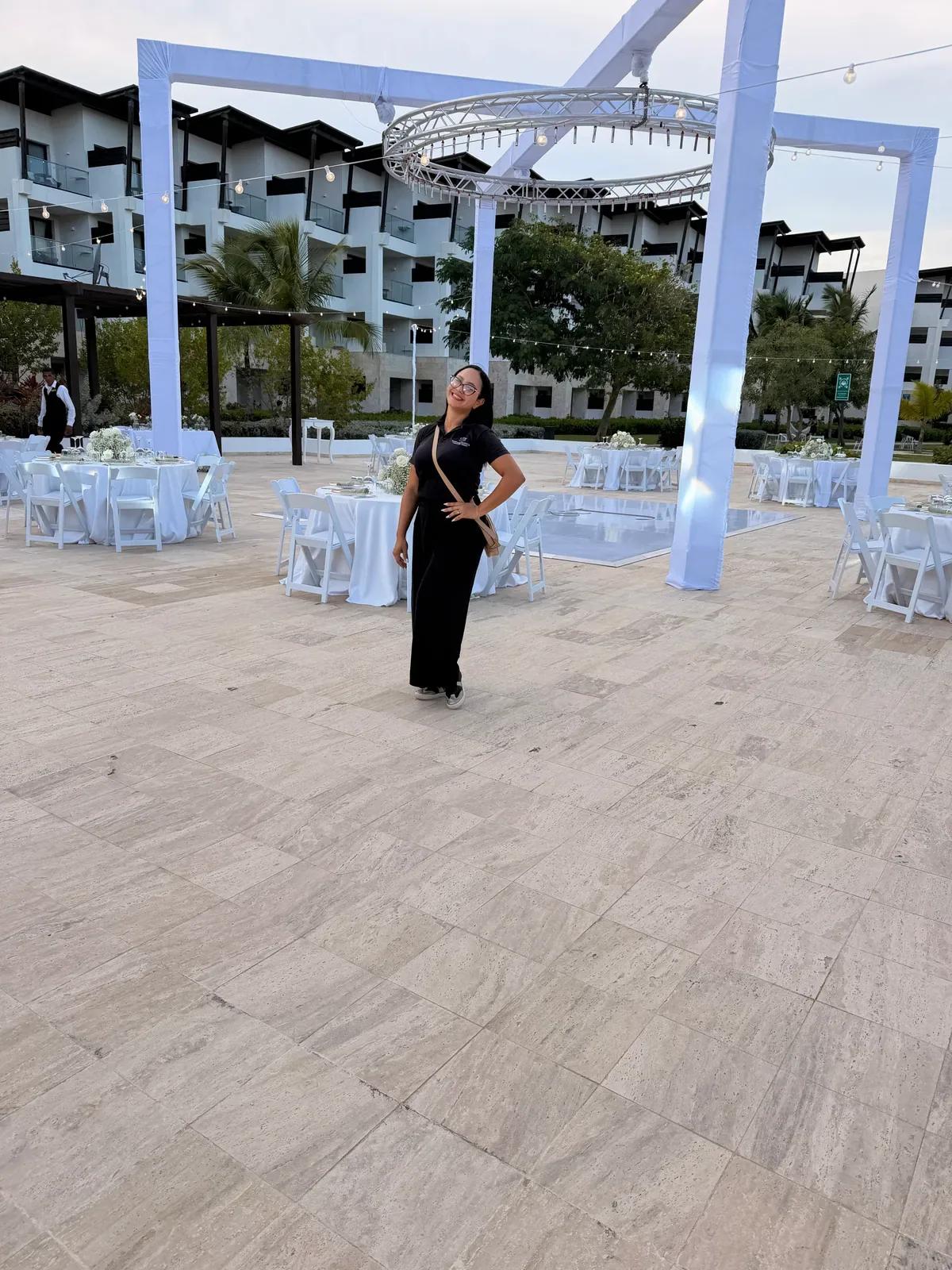
Decide where the legal marriage will happen
Start with the legal outcome, not the décor. If you want to marry legally in the Dominican Republic, identify the civil office handling the marriage and confirm eligibility and documents for your circumstances. If you prefer to complete the legal process at home, the Punta Cana event can be symbolic.
The JCE publishes civil-marriage requirements. Its checklist is a starting point for confirmation by the receiving office; a hotel's package description does not replace official review.
Compare the work, not the appearance
Both celebrations can include vows, rings, family participation and a reception. Their photographs may look similar while their legal effects differ. Ask the proposed officiant what role they perform and what document, if any, results from the service.
For the civil route, assign responsibility for the accepted documents, official appointment, witnesses and certificate collection. For a symbolic event, assign responsibility for the script, language, timing and delivery. Do not let the similarity of the ceremony setup conceal a missing legal step.
Consider how much flexibility you need
A symbolic celebration allows the couple to develop a personal script with the celebrant, subject to venue rules and the agreed service. Discuss readings, translations and participation without promising a particular duration before the script is prepared.
A civil ceremony must follow the authority's required formalities. Ask where personal elements may be included and whether a separate symbolic portion would be appropriate. Never ask the officiant to omit legal content because the reception schedule is running late.
Compare complete costs
List document issuance, authentication, accepted translation, civil fees and delivery separately from ceremony production. Then price the venue, celebrant, sound, flowers, chairs and coordination. If marrying at home, include those domestic costs rather than treating the legal process as free.
A symbolic option may reduce overseas administration, but it does not automatically make the full destination wedding cheaper. Dinner, transport and production can remain identical. Compare the actual services and payment terms, not a package label.
Keep religious decisions separate
A religious wedding is not simply a more elaborate symbolic ceremony. Its eligibility, venue and form must be determined by the competent religious authority. Ask separately what civil registration or documentation is necessary.
Do not assume that hiring a religious-looking officiant or using religious imagery provides either religious recognition or civil validity. If faith is central to your plans, resolve that process before booking an event format that may be incompatible.
Make the invitation and timeline clear
Couples who marry legally before travelling can describe the Punta Cana gathering as their wedding celebration. Decide together what you wish to share with family, while keeping the actual legal paperwork accurate. Do not describe a symbolic certificate as a government marriage record.
Build the event schedule around the confirmed ceremony format, with time for interpretation, guest arrivals and photographs. If official documents are delayed, ask about contractual alternatives promptly; a symbolic fallback does not turn into a legal marriage merely because everyone attends.
Use your own circumstances to choose the route
Consider an illustrative couple who wants a small legal appointment near home and a larger gathering in Punta Cana. Their destination brief can focus on the celebration: an officiant who tells their story, a clear script, family participation and the reception. They still need to complete the home-country legal process rather than assume the overseas event replaces it.
Another couple may attach particular importance to the legal marriage taking place in the Dominican Republic. Their first milestone is then confirmation of eligibility, documents and official arrangements. The venue search can proceed alongside that work, but the contract should reflect anything still awaiting approval.
Neither example is a recommendation for every nationality or family. They demonstrate that the decision begins with the outcome you want and the process you are willing to manage. An attractive ceremony package should support that decision, not make it on your behalf.
Ask what the word officiant means in the proposal
Request the person's actual role and the service they will provide. For a symbolic event, ask whether they create the script, conduct a planning call, lead a rehearsal or simply deliver text supplied by the couple. Confirm language, arrival time and backup arrangements if the named person cannot attend.
For a civil marriage, ask the responsible authority who is authorized to conduct the official act and how the appointment is confirmed. Do not infer that authorization from the word officiant in a supplier brochure. If the same event includes a personal celebration, distinguish the official portion from any additional presentation.
This distinction also clarifies payment. A fee for writing and delivering a symbolic ceremony is not automatically a civil-registration fee. Ask for separate descriptions so you understand both the experience being purchased and the document, if any, that will result.
Develop a symbolic script that reflects the couple
Agree the emotional tone before choosing decorative rituals. Decide whether the ceremony should be intimate, formal, humorous or reflective, and how much of your personal story you are comfortable sharing. Give the celebrant accurate details and identify anything private that must not be included.
Choose readings and speakers because they contribute meaning, not because a package has unused slots. If several relatives participate, assign a purpose and approximate length to each contribution. Ask for the script early enough to review names, pronunciation and any references to the couple's legal status.
A symbolic ritual should be understandable and feasible in the setting. Check materials, cleanup, wind and any venue restrictions before committing to an idea. Do not present a borrowed religious practice as part of a faith's recognized marriage rite without guidance from the appropriate religious authority.
Plan bilingual participation without repeating everything twice
Identify which languages the couple, witnesses and majority of guests understand. Then decide where translation genuinely helps: spoken instructions, personal vows, a short explanation of a reading or a printed program. The aim is for guests to follow the ceremony, not to make every sentence unnecessarily long.
Ask the celebrant how transitions will work. A reader may speak in one language while a brief summary is delivered in another. Personal vows can remain in the couple's chosen language with an agreed translation available for guests. Review the final order with the sound team so microphones arrive where needed.
For a civil act, ask the authority about interpretation separately. A solution suitable for an emotional wedding speech may not meet the needs of an official appointment. Keep responsibility for that decision with the people conducting the legal process.
Compare budgets with the same event assumptions
Create two columns using the same guests, venue, meal, décor, photographs and reception hours. In the civil option, add the confirmed administrative services and official arrangements. In the symbolic option, include the separate legal process wherever you intend to complete it.
Then examine services that change because of timing. An additional appointment may require transport, an extra overnight stay or different availability from a photographer. A symbolic ceremony may include substantial script preparation or a rehearsal. Neither column should hide work merely because it happens outside the main wedding day.
If an advertised package bundles several elements, ask for its exclusions and the price of the missing services. Compare the final amount needed for your plan rather than subtracting one advertised civil supplement and calling the result the total saving.
Keep contracts consistent with the chosen ceremony
Make sure the venue, planner and celebrant proposals use the same ceremony description. Identify who books the official appointment when relevant, who communicates document deadlines and who collects the final certificate. If those tasks are excluded, allocate them before signing.
Ask what happens if the legal appointment changes while the reception remains available. Does the agreement allow a different ceremony format, and what services would need to be replaced or refunded? Obtain the answer before a difficulty arises; a friendly promise of flexibility is not a complete operational plan.
Also record who may approve a change. The couple should not discover that a relative or supplier silently converted the ceremony because they misunderstood a delay. A single decision-maker for operational changes can prevent conflicting instructions while both partners retain authority over the marriage decision.
Make a realistic ceremony-day schedule
Start with the confirmed time and place, then work backward through transport, guest arrival and preparation. Identify who carries any required originals and who checks that the people with official roles have arrived. Keep documentary responsibilities separate from flowers, rings and other personal items.
After the ceremony, allow for congratulations, family photographs and movement to the next location. A short symbolic script does not mean guests can instantly move from seated ceremony to dinner. Similarly, do not compress an official appointment to fit a timetable built before its format was confirmed.
Provide one practical run sheet to the suppliers. It should distinguish fixed commitments from flexible moments and name the person who communicates delays. Guests need a shorter version with arrival, transport and contact information rather than the complete technical schedule.
Discuss two dates with family before sending invitations
When the civil marriage and celebration occur on different days, decide how you want to describe them. Some couples prefer a private legal appointment and a public destination celebration; others invite family to both. Agree together before relatives receive different explanations.
You do not need to disclose private administrative details to every guest. However, the wording should not imply that a symbolic certificate is an official civil record. Keep the legal date accurate wherever an authority requires it, while making the celebration date clear for travel and attendance.
If family members have strong expectations about a religious or legal event, discuss those early. A respectful conversation before booking is easier than trying to resolve a misunderstanding during a rehearsal. Ask the relevant professional or religious authority to clarify factual questions rather than allowing assumptions to determine the program.
Respond deliberately if the legal process is delayed
First obtain a clear explanation from the authority responsible for the missing requirement. Establish what is outstanding, who can resolve it and whether the official appointment remains possible. Do not treat a supplier's guess as a legal decision.
Next, review the event alternatives with the couple and the contracting parties. Keeping a symbolic celebration may be an option, but it must be agreed and described accurately. Check changes to the officiant, script, transport and fees before announcing a new plan.
Finally, assign the unfinished legal steps to a named person and maintain their deadlines. A successful reception can easily distract from paperwork still requiring action. The celebration does not remove the need to complete the civil process and obtain the appropriate record.
Complete the handover after the celebration
For a civil marriage, follow the agreed certificate collection and any later authentication or registration requirements. For a symbolic event, store the keepsake separately from legal records so it is not accidentally submitted as an official certificate.
Ask the planner and celebrant to close any remaining service questions, such as delivery of agreed materials or final invoice corrections. Keep the civil authority's correspondence with the legal file rather than scattered across supplier chats.
Your decision is complete when the legal outcome is understood, the celebration accurately reflects it and each remaining task has an owner. This makes it possible to enjoy the destination event without expecting a ceremony format to perform a legal function it does not have.
Choose with a simple decision file
Record where the legal marriage takes place, who confirms requirements, who conducts each ceremony and what certificate will be obtained. Add deadlines, costs and unresolved questions. Both partners should be comfortable with the distinction before deposits are paid.
Sertuin Events can coordinate the destination event around this decision. A clear brief lets the team align the celebrant, venue and schedule while the competent authority handles the legal process.
Frequently asked questions
Is a symbolic ceremony legally binding?
It does not itself create a civil marriage. Complete the legal process separately with the competent authority.
Can a friend lead our symbolic ceremony?
Ask the venue and confirm the arrangement in your event plan. It does not make that friend a civil officiant.
Can the legal and celebration dates differ?
Yes. Keep the actual civil date accurate in official documents and explain the celebration program as you prefer.
Which option is cheaper?
Compare the full costs of the legal process and event. Symbolic ceremonies can simplify overseas administration without changing reception costs.
 DR Web Studio

