How to Plan a Multicultural Wedding in Punta Cana Without Losing Family Traditions
A multicultural wedding needs one cultural or religious liaison who documents each ritual, while the planner controls logistics and the couple makes final decisions. We have coordinated Hindu, Jewish, Catholic and Western weddings, including kosher and halal requirements, with specialized providers where needed.
Plan a multicultural wedding with one coordinated timeline
We coordinate Punta Cana logistics while your family or religious authority protects the meaning of each tradition.
Explore multicultural planning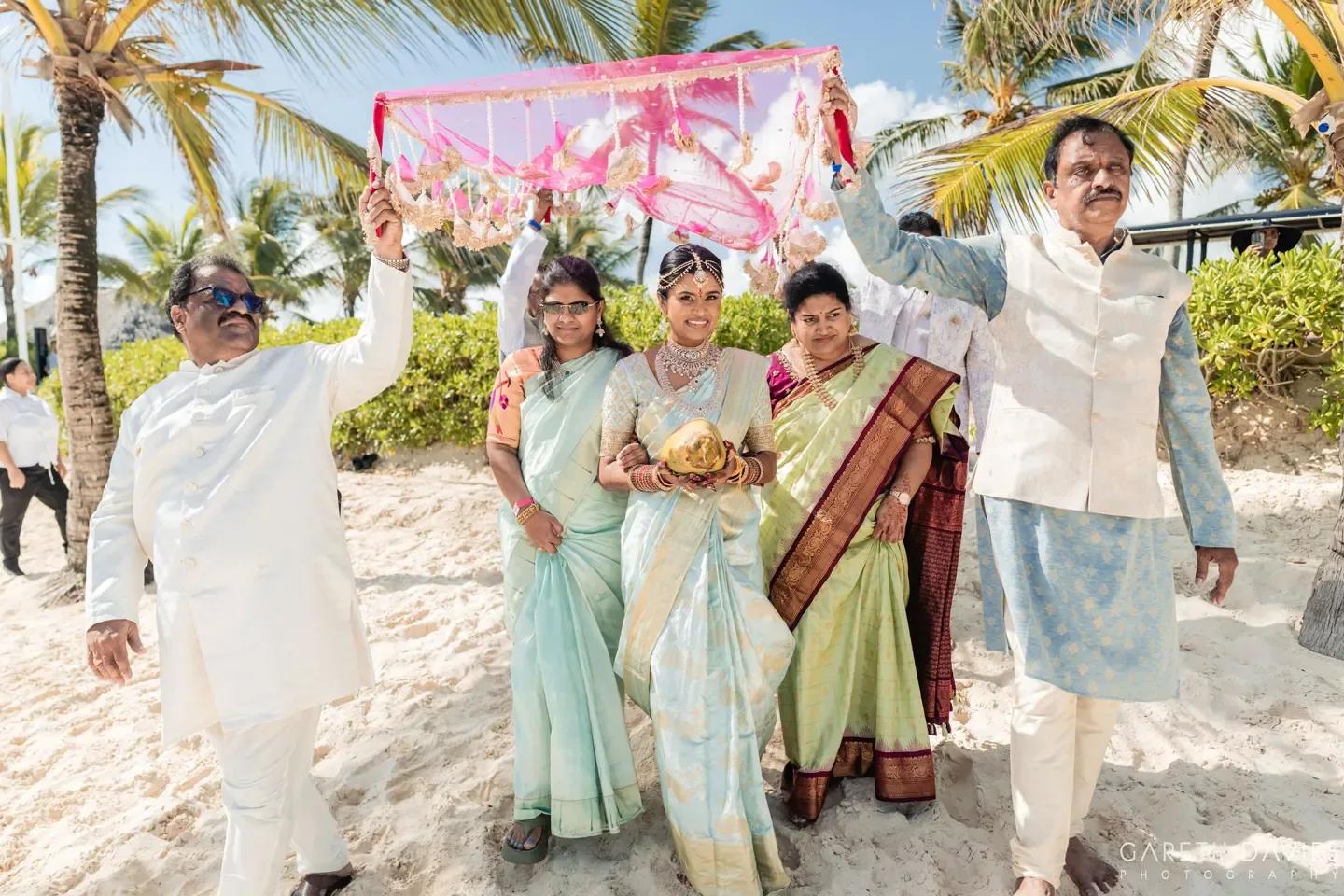
Separate cultural authority from logistics
A planner can understand the structure of Hindu, Jewish, Catholic, Western and other weddings without claiming authority over a family's faith. Assign one person who can confirm ritual order, duration, music, clothing and sacred requirements. This may be a parent, relative or religious leader.
The couple remains central
When families disagree, the couple makes the final decision. The cultural liaison advises and validates; the planner turns the approved decisions into venue requests, supplier instructions and a working timeline.
Build one master schedule
The liaison should ideally participate throughout planning. In practice, the essential step is to provide accurate ritual durations and dependencies so they can be inserted into the master timeline. That avoids a cultural program existing separately from transportation, catering, photography and venue operations.
Food and language
Kosher, halal and other dietary requirements must be disclosed before selecting menus and suppliers. The venue or food provider must confirm what it can actually execute. We work directly in English and Spanish and coordinate external interpreters when you need another language. A religious ceremony should still be led or translated by an appropriate authority.
Use specialized providers
Certain weddings need suppliers who understand culture-specific equipment, decoration or production. They should be selected for that competence, not only price.
The most common mistake
Do not assume a Dominican planner knows every family-specific custom. The planner's job is to organize the destination, venue, suppliers, movement and timing. The family's authority defines the cultural meaning. Clear roles protect both.
 DR Web Studio
